 Login AI
Custom Software Development
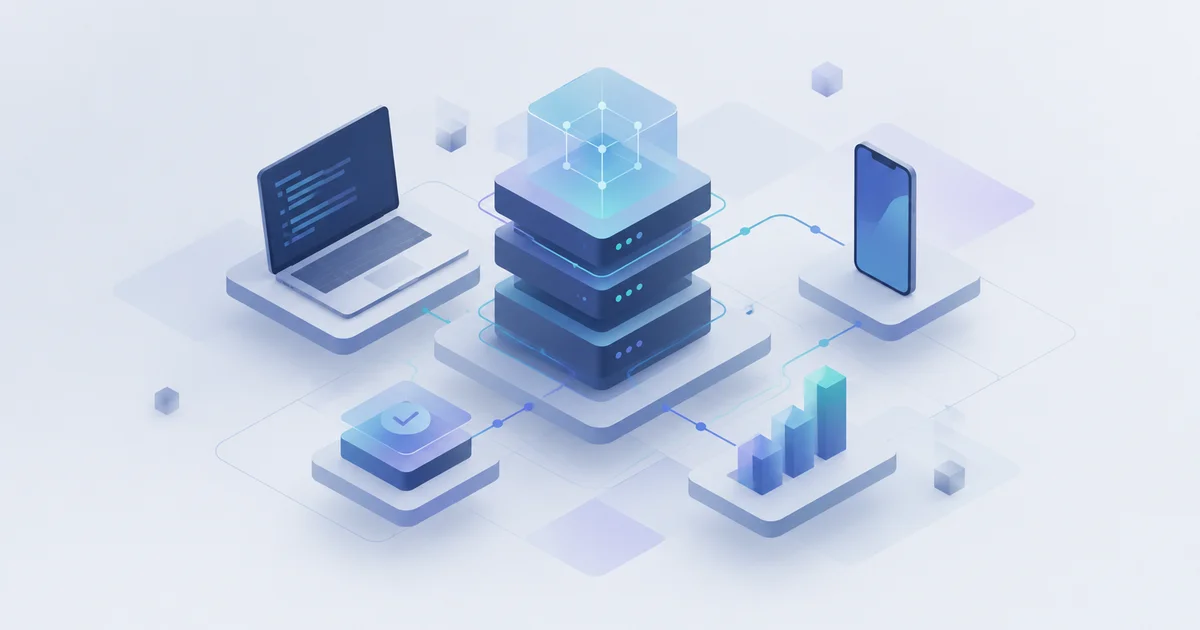
We design and develop full-cycle software: requirements analysis, architecture, development, testing, and maintenance. We pick a best-practice stack for each product type – so the system is fast, secure, and scalable.
We build reliable software for your needs: from web services to AI platforms.
Pricing
from ₽3,000,000
per project
This is the lower bound of a project. We scope the exact quote after a brief: it depends on volume and the number of integrations.
Capabilities
Full-cycle development
From prototype and architecture to release and support: you get a finished product, not a pile of code.
Solid architecture
We design modular, testable, and scalable systems – ready for load and business growth.
Quality and security
Automated tests, code review, security audits, and industry-standard compliance.
Support and growth
We maintain the product after launch: updates, new features, and optimization.
From request to result
1
Requirements analysis
We break down the task and fix goals, users, and constraints. You get a spec and a quote.
2
Architecture
We design modules, data, and integrations. We agree the stack and plan before writing code.
3
Sprint development
We work in short sprints with demos: you see the product and reprioritize every 1–2 weeks.
4
Testing and release
Automated tests, code review, load, and security audit. After release we support and grow the product.
Check if it fits you
Good fit
A product from scratch or a refactor
A new service, platform, or legacy modernization. You need the full cycle: from idea to production.
Growth without hiring
More tasks than the team can handle. An external team adds capacity without a long hiring process.
Not a fit
A two-week project
A short one-off script or prototype: a full dev process outweighs the formalities.
Tight deadlines without a spec
If the product is needed "yesterday" and requirements are unknown, we plan iteratively instead of a fixed quote.
What you get
−50%
time spent on manual reports
We built a web system with ERP integration and analytics: from design to release. Data stopped living in spreadsheets, and manual exports disappeared.
Yours to keep
Code in your repository
The code stays yours and in your repository. The system keeps evolving even if the team changes, and you stay the owner.
Days to onboard
Documentation with the code
Documentation travels with the code: architecture, integration points, data schema. A new person gets up to speed in days.
A failure in five minutes
Observability before launch
Monitoring and alerts are configured before launch: response time, error rate, server load. A failure is visible in five minutes.
Automated run
Tests catch regression
Automated tests cover critical scenarios, so regression after a new feature is caught automatically. Production users see a working screen.
Fixed before attack
A security audit
Security is audited after release too: dependency updates, access audits, data encryption. A vulnerability is closed before it can be exploited.
An hour per incident
Response time
The SLA defines the response time: a critical incident is resolved within business hours. Support volume is scaled to your budget.
Checks before kickoff
Requirements and scenarios
We gather requirements through interviews with key stakeholders: scenarios, load constraints, integration requirements. A gap in the spec costs more than any code revision.
Architecture on a prototype
We validate architecture on a prototype: a load test with 10k users exposes bottlenecks while they're still cheap to fix, not when the system is already in production.
Stack for the product type
We align the stack to the product type: one set of technologies for an internal system, another for a public service. The decision is documented with justification.
Risks and fallback plans
We assess risks upfront: dependency on external suppliers, legacy data migration, version compatibility. Each risk gets its own fallback plan.
Metrics before the start
We define success metrics before the start: response time, conversion, availability. Without numbers you can't tell whether the release succeeded or merely shipped.
First version boundaries
We lock the first version's boundaries: what's mandatory for launch and what can wait. A narrow MVP saves budget and shortens the path to a usable result.
How the system is built
We work in 1–2 week sprints
We work in 1–2 week sprints and show working code at the end of each one. You see the product itself, while slide decks stay an appendix to the demo.
Sprint priorities are agreed upfront
Sprint priorities are agreed upfront, so you approve the order of work before the team starts. Changing the plan at that point costs less than reworking a finished result later in the cycle.
The developer owns the task end-to-end
The developer owns the task end-to-end: from analysis to their own test. Handoffs between specialists eat time and hide small errors.
Every change goes through code review
Every change goes through code review. A second pair of eyes catches bugs and makes architectural decisions deliberate rather than accidental.
Build and deploy to staging run every sprint
Build and deploy to staging run every sprint. Integrations are tested on a staging environment, so production sees only a verified build.
Notes from demos feed into the next sprint's plan
Notes from demos feed into the next sprint's plan, so the product adapts to your vision gradually, one step at a time after release.


Technologies
The technologies we use in our work and their role in a project.
Web apps and high-load SaaS
We write the client side in React and Next.js, and TypeScript catches type errors before release. The backend runs on Node.js; where we need fault tolerance, we write services in Go and Python.
Mobile ecosystems
Native iOS code is written in Swift, Android code in Kotlin. When one codebase has to cover both, we pick Flutter or React Native and ship sooner.
Cost calculator
This is an indicative range, not a quote. We scope the exact estimate after a brief: it depends on volume and the number of integrations.
Duration, months
Complexity
Integration
Add-ons
Support
Year one: updates and monitoring, a reply within 2 business days.
Service
Custom Software Development
The estimate covers our team's work. Hardware, third-party service licences and travel are added on request.
Estimated cost
₽7.5M
Timeline
34 wk
Frequently asked questions
How is the cost formed?
From the spec and scope. We give a quote before start, agree the scope and stage payments, and track changes through spec updates.
Who owns the code?
You do. Code, documentation, and access are handed to you; the code lives in your repository from day one.
How do you control quality?
Automated tests, code review, and security audits. We run load and failure scenarios before release, not after.
What happens after release?
Support: updates, new features, and optimization. The SLA format is agreed separately.
What teams add to this service
Related Services
Corporate Websites
A modern company website: presentation, trust, and a flow of leads.
Landing Pages
High-converting one-pagers that turn visitors into customers.
High-Load Systems
Engineering for distributed systems that move millions of events and hold a hard response-time budget.
UI/UX design
Clear user journeys, responsive screens and files ready for development.
Part of Solutions
Implementation Examples
Ready to discuss your task?
Leave a request – we'll get back with a proposal and a preliminary estimate.
Contact us