 Login AI
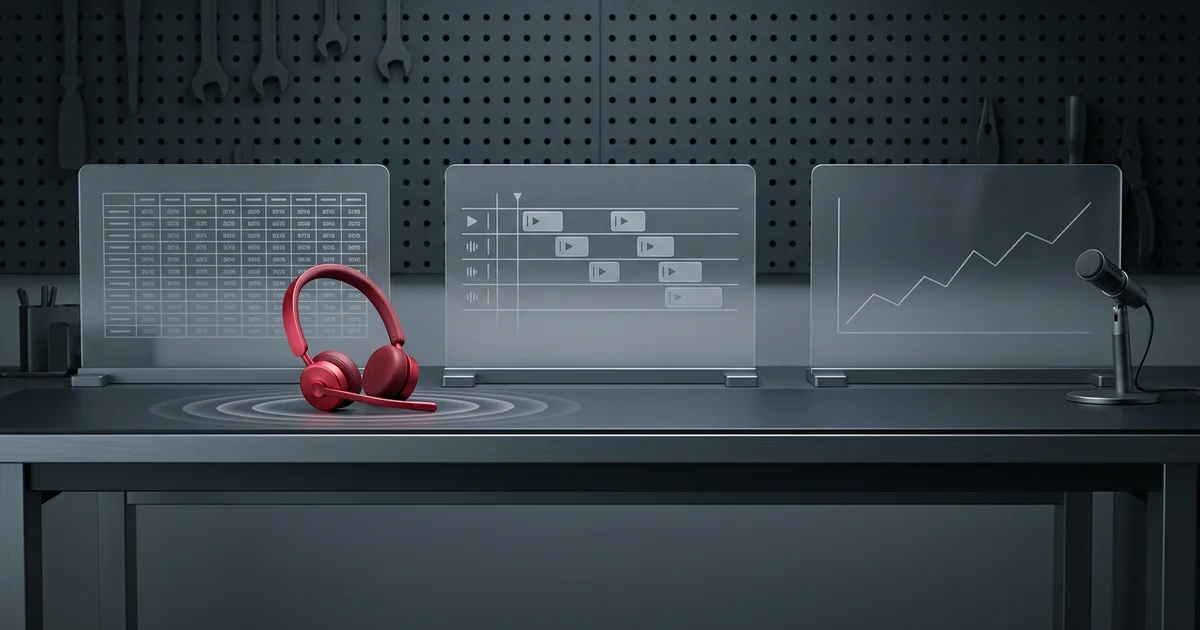
Voice AI agents for inbound and outbound calls
We put a voice agent into your contact center: it runs inbound and outbound calls by scenario, listens through streaming recognition, answers with synthesized speech, records the call, and hands the operator a transcript with the reason. We count minutes, cost, and the share of resolved requests.
The agent answers and places calls, recognizes speech as it streams, replies with voice, and hands a hard conversation to an operator with the transcript.
Pricing
from ₽900,000
per project
This is the lower bound of a project. We scope the exact quote after a brief: it depends on volume and the number of integrations.
Capabilities
Calls in both directions
The agent answers inbound calls and dials a list on a schedule, records each conversation, and keeps the transcript next to the number and the call outcome.
Recognition in the stream
Streaming ASR returns text as the customer speaks, so the agent replies in 300–700 ms and fills a long pause with a question.
Handoff to an operator
On a hard question the agent transfers the call and passes the transcript, the handoff reason, and the customer data it collected.
Call analytics
We measure duration, cost per minute, and the share of requests resolved without an operator, broken down by scenario, number, and hour.
From request to result
1
Scenario and telephony audit
We review call recordings, routing, and the channel codec. We fix which requests the agent closes and where an operator joins.
2
Scenario and voice
We build the step tree, the replies, and the escalation rules, then choose a voice and speaking rate for your audience and language.
3
SIP, ASR, and TTS integration
We connect the PBX, streaming recognition, and synthesis into one loop, and set recording, timeouts, and dropped-call handling.
4
Pilot on real calls
Four weeks on live traffic: we check transcripts, edit replies, measure the share of resolved requests, and move the agent to production.
Check if it fits you
Good fit
Repetitive inbound calls
Requests, order status, and appointment booking follow one scenario, so the agent closes those calls and frees the line for hard questions.
SIP telephony with recordings
You have a PBX, numbers, and an audio archive: we build the scenario from recordings and check recognition quality before launch.
Not a fit
Poor call recordings
Noise, cut-offs, and a low bitrate lower ASR accuracy: a clean channel and a normal codec come first, or the scenario has to guess.
Complex legal consultations
Contract review and money disputes stay with a person: the agent gathers the data and hands the dialog to a lawyer with the transcript.
What you get
1,000–50,000
Minutes in the estimate
The calculator covers one thousand to fifty thousand minutes per month. The price includes telephony, recognition, synthesis, and scenario support, so the budget is clear before the start.
4 wks
A pilot in four weeks
We launch one inbound scenario with telephony and operator handoff in four weeks. During that time we check transcripts, edit replies, and measure the share of resolved requests.
ASR + TTS
ASR and TTS tuned separately
Recognition and synthesis are tuned for the language and the domain separately. We fit the name dictionary, accents, and speaking rate on real recordings, so accuracy grows through the pilot.
What the delivery includes
Voice scenario
A step tree with replies, branches, and escalation rules. The scenario covers the opening, data capture, answers to common questions, and the operator handoff.
Telephony and speech loop
A SIP trunk, streaming recognition, and speech synthesis in one loop. We set call recording, timeouts, and dropped-call handling.
Recordings, transcripts, and metrics
Audio, call text, and a report on duration, cost per minute, and the share of resolved requests. The metrics update after every call.
How the system is built
SIP and streaming recognition
A call arrives on a SIP trunk, audio goes into streaming ASR, and text appears as the customer speaks. The agent gets each turn in fractions of a second, replies at conversation speed, and keeps the recording for review.
Scenario and operator handoff
The agent runs the dialog in steps, collects data, and checks the escalation condition. When a question leaves the scenario, an operator gets the call, the transcript, and the reason, so the conversation continues without repetition.
Speech synthesis and recording
The reply text goes to TTS, synthesized speech plays into the line, and audio and transcript are written to storage. The recording links to the number and the call card, so review runs on facts.
Where the solution pushes back
- 01
Quality depends on the channel
Recognition accuracy rests on the codec and channel bandwidth: on narrowband G.711 the agent hears less detail, so the audit checks recordings and widens the band where needed.
- 02
The scenario keeps the dialog in steps
The agent runs the conversation along a step tree and collects data in a set order: the scenario bounds set the dialog depth, and a step beyond them triggers an operator handoff.
- 03
Synthesized speech gets editorial review
An editor reads the synthesized speech: we set stress, pauses, and the pronunciation of brand names by hand, so the voice stays even and predictable on long replies.
Technologies
The technologies we use in our work and their role in a project.
Telephony and speech loop
A call lands on Asterisk over SIP, streaming recognition runs on Whisper and Yandex SpeechKit, call events flow through Kafka, while transcripts and metrics sit in PostgreSQL.
Cost calculator
This is an indicative range, not a quote. We scope the exact estimate after a brief: it depends on volume and the number of integrations.
Minutes per month
Scenarios
Multilingual support
Telephony
Add-ons
Support
Year one: updates and monitoring, a reply within 2 business days.
Service
Voice AI agents for inbound and outbound calls
The estimate covers our team's work. Hardware, third-party service licences and travel are added on request.
Estimated cost
₽1.3M
Timeline
4 wk
Frequently asked questions
How does the agent connect to telephony?
Through a SIP trunk to your PBX or to our gateway. The number stays yours, and recording and routing follow the contact center rules.
Which languages and voices does it speak?
Russian and English at the start, with more languages added through the scenario dictionary. We pick a voice from the TTS library or clone your reference sample with the speaker's consent.
How is a call transferred?
The agent detects the handoff reason, tells the customer, and transfers the call to a free operator. The call card keeps the transcript, collected fields, and a link to the recording.
What does a minute cost and how long is the launch?
A minute combines telephony, ASR, TTS, and scenario support, with a reference of 40 RUB per minute in the base setup. A one-scenario pilot takes four weeks; we add a second scenario in two.
What teams add to this service
Related Services
Part of Solutions
Implementation Examples
−70%
Request handling time
Ready to discuss your task?
Leave a request – we'll get back with a proposal and a preliminary estimate.
Contact us