 Login AI
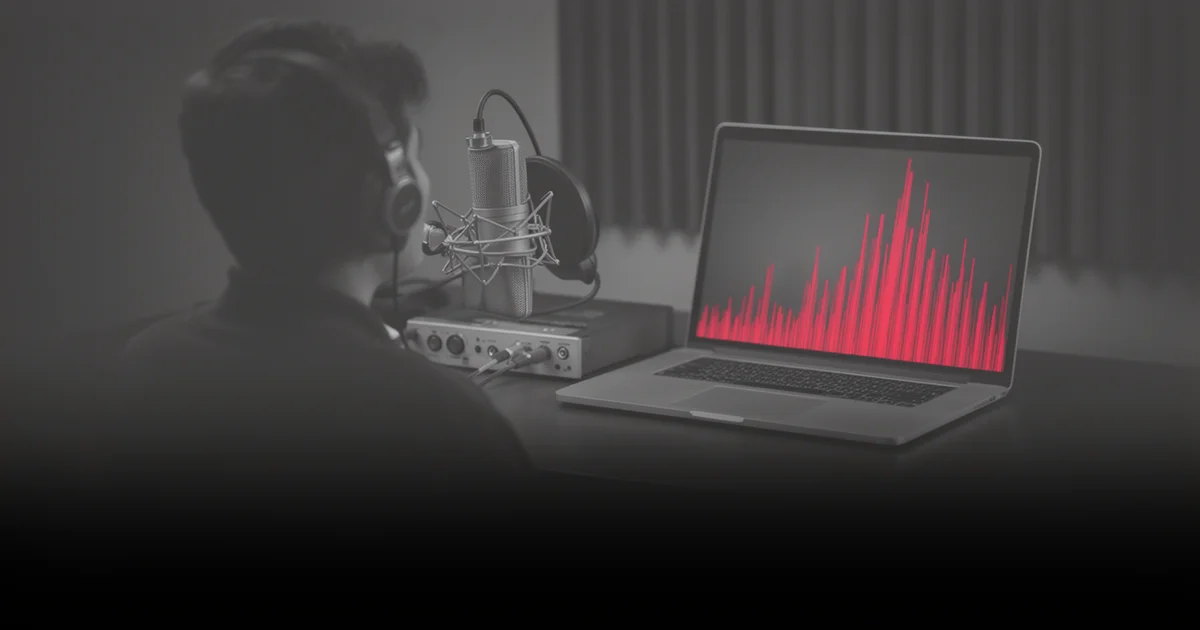
Building speech recognition systems
We build speech recognition for your domain: phone calls and meetings, diarization, term glossaries, and WER measured on real recordings.
Speech to text for your domain: terms, names, and multiple speakers.
Pricing
from ₽1,500,000
per project
This is the lower bound of a project. We scope the exact quote after a brief: it depends on volume and the number of integrations.
Capabilities
Domain and glossary
We plug in a glossary of terms and names so the model does not confuse professional vocabulary.
Diarization
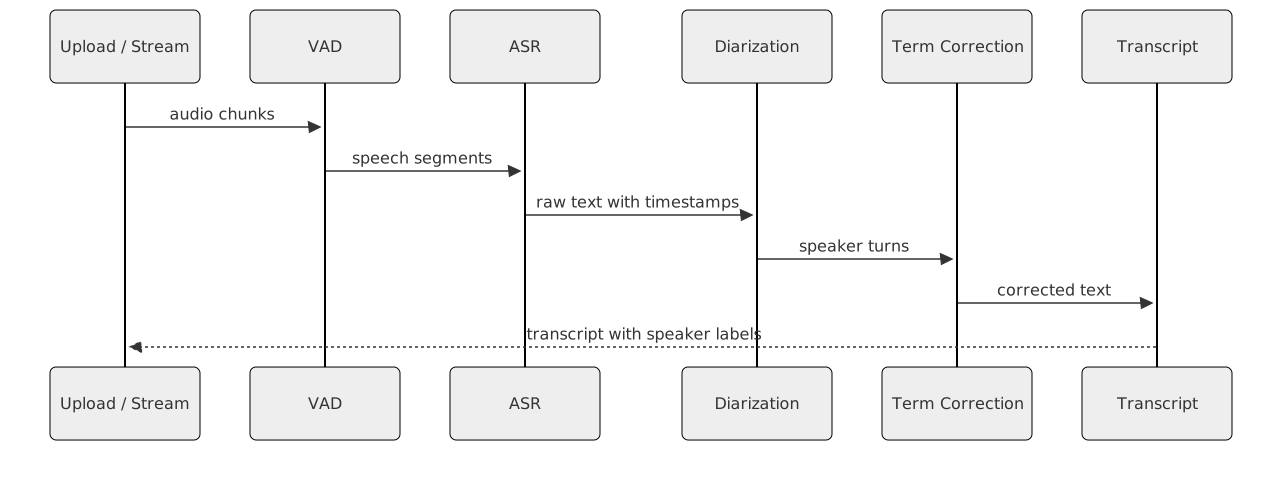
We separate speakers in a call or meeting instead of dumping lines into one stream.
Noise and channels
We handle telephony, microphones, and poor links separately, each with its own set of settings.
WER on your recordings
We measure quality on your recordings, not a vendor's generic metric.
From request to result
1
Recording audit
We listen to real recordings: channels, noise, accent, and the glossary to support.
2
Glossary and diarization schema
We fix the term glossary, speaker-splitting rules, and output format requirements.
3
Training and adaptation
We fine-tune the model for the domain and channel, and measure WER on held-out recordings.
4
Launch into the stream
We connect recognition to the call queue and set up error review.
Check if it fits you
Good fit
Recordings exist for evaluation
A few hours of real audio give an honest WER before the start.
A stable channel
Microphone and line quality are steady: the model does not retrain on random noise.
Not a fit
Critical names and amounts
Where an error in a number is unacceptable, recognition needs manual review.
No term glossary
Without a list of terms and names, the model confidently writes the wrong word.
What you get
−30%
WER after glossary adaptation
Recognition was adapted to terms and names, and diarization separated the agent and the customer.
WER 8%
Accuracy on your domain
WER on held-out domain recordings drops to eight percent after glossary and channel adaptation.
1.2 s
Fast transcription
Transcribing a minute of audio takes 1.2 seconds on the server, so the transcript is ready right after the call.
Up to 3 voices
Speaker separation
Diarization tracks up to three voices per stream, so the transcript shows where the agent speaks and where the customer speaks.
How the system is built
The glossary of terms and names is added before training
The glossary of terms and names is added before training, so the model recognizes rare vocabulary with confidence: product names, customer surnames, and industry abbreviations come through exactly.
Diarization separates speakers
Diarization separates speakers into tracks, so a call transcript reads as a dialog of agent and customer turns and makes quality review easier by channel.
Quality depends on the channel
Quality depends on the channel, so phone recordings and meeting microphones are handled with their own settings: the team gets exact text for each sound source.
WER is measured on your domain recordings
WER is measured on your domain recordings, so the benchmark reflects real accuracy: the team sees quality on its own calls and compares it before and after adaptation.
Where the solution pushes back
- 01
Names and amounts
Similar numbers and surnames get confused, so names, amounts, and part numbers stay weak. A glossary of terms and names cuts the number of such errors.
- 02
Noise and overlapping speech
Words are lost where people talk at once. Noise and overlapping speech cut accuracy, so we record on a channel with less interference.
- 03
A domain change
A meeting model loses quality on calls, so a domain change needs adaptation. The domain sets the glossary and the recognition settings.
- 04
Adaptation to terms
Speech without term adaptation gives confident, wrong transcripts. Adaptation to terms and fact-checking cut the risk of such an error.
What recognition covers
What recognition covers
The model trains on your recordings: the channel, accent, and domain glossary set the recognition settings.
A glossary of terms and names is added before training, so rare vocabulary and customer surnames come through with confidence.
How we check quality
How we check quality
We measure WER on held-out recordings separately by channel and speech type, so accuracy is visible for each sound source.
Diarization splits speakers, and the transcript arrives with agent and customer labels for quality review.
Technologies
The technologies we use in our work and their role in a project.
Audio and models
Audio is stored in MinIO, recognition models train on PyTorch, inference runs on vLLM, and the processing queue is in Kafka.
Cost calculator
This is an indicative range, not a quote. We scope the exact estimate after a brief: it depends on volume and the number of integrations.
Languages
Domain adaptation
Streaming mode
Diarization
Add-ons
Support
Year one: updates and monitoring, a reply within 2 business days.
Service
Building speech recognition systems
The estimate covers our team's work. Hardware, third-party service licences and travel are added on request.
Estimated cost
₽1.8M
Timeline
4 wk
Frequently asked questions
Do recordings leave the perimeter?
By default no: recognition runs inside your perimeter. An external service only if you allow it.
What about multiple speakers?
Diarization splits voices into tracks. Accuracy drops when people speak at once, and the benchmarks show it.
How is quality measured?
WER on your held-out recordings by domain, separately by channel and speech type, not a vendor's single number.
How long does adaptation take?
The first domain adaptation starts at three weeks, including labeling and a benchmark on real recordings.
What teams add to this service
Related Services
Part of Solutions
Implementation Examples
−70%
Request handling time
Ready to discuss your task?
Leave a request – we'll get back with a proposal and a preliminary estimate.
Contact us