 Login AI
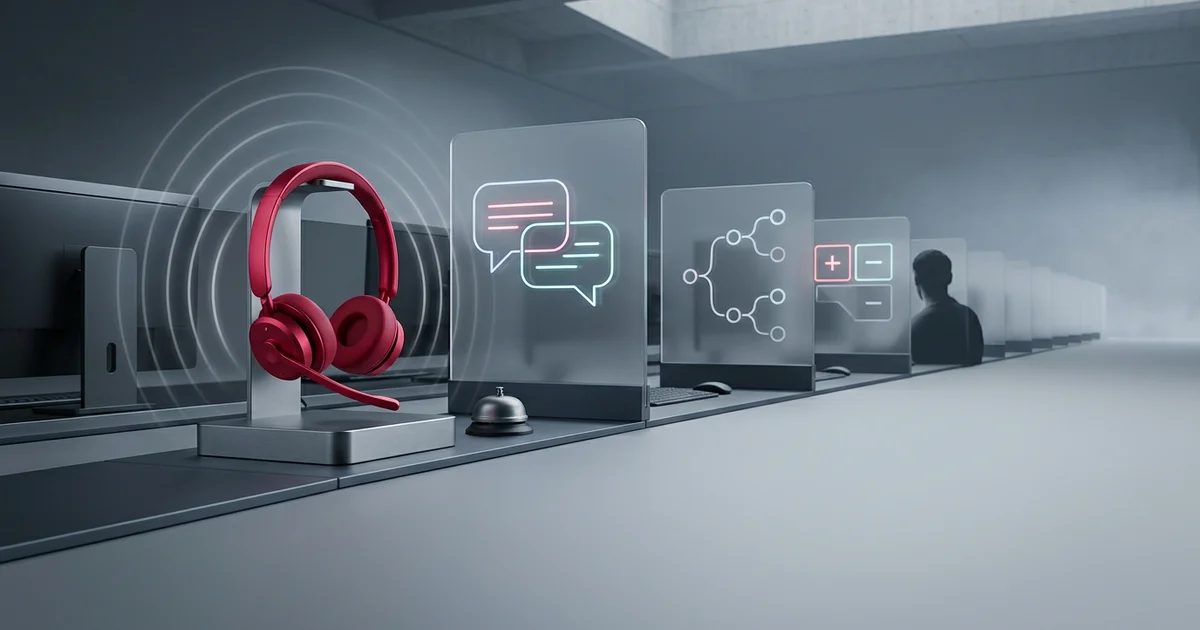
AI support automation for customer service
We automate support for teams with three or more channels and around 5,000 requests a month. We bring the channels into one queue and score the quality of every dialog. The pilot runs three to four weeks.
The bot sorts requests from three or more channels, answers from your knowledge base with a source link, and hands hard cases to an operator with context.
Pricing
from ₽800,000
per project
This is the lower bound of a project. We scope the exact quote after a brief: it depends on volume and the number of integrations.
Capabilities
Triage and routing
The bot detects the topic, language, and priority of a request and places it in a queue: delivery, payment, or returns. Operators get urgent tickets, and the bot closes routine ones.
Answers with a source link
The answer comes from your policies, product cards, and order history. The bot attaches a link to the document or helpdesk record for every fact.
Quality scoring across every dialog
The scorecard reviews 100% of dialogs rather than a sample: tone, accuracy, policy compliance, and repeat requests. The report shows topics with low quality.
Helpdesk and CRM integration
We connect Bitrix24, Zendesk, or another system through APIs and webhooks. The bot updates the card and hands the operator a ticket with the transcript.
From request to result
1
Channel and topic audit
We read a month of exports: channels, recurring topics, and the share of requests a template closes. You get a topic map and an auto-answer estimate.
2
Scenarios and the knowledge base
We design dialog branches, auto-answer boundaries, and operator handoff points. We clean the documents, assign a base owner, and approve answers.
3
Helpdesk and CRM integration
We connect channels, the helpdesk API, and the CRM: webhooks, customer sync, and access rights. We test every scenario on a staging queue.
4
Pilot and launch
For three to four weeks the bot runs on one queue alongside operators. We compare answers with QA, fix scenarios, and roll the bot out to other channels.
Check if it fits you
Good fit
High volume and three channels
Support takes around 5,000 requests a month from chat, email, and messengers. The bot absorbs repetitive topics.
A helpdesk with an open API
You run Bitrix24, Zendesk, or another system with a REST API and webhooks. The bot reads cards and updates statuses in the operator interface.
Not a fit
No knowledge owner
Documents update at random and contradict each other. We assign an owner for the base first, then build scenarios and answers.
Complex and money cases
Refunds, payment disputes, and custom terms stay with a person. The bot gathers context and hands the dialog to an operator.
What you get
82%
requests without an operator
In the retail-support-bot project, the bot handled chat and email, pulled orders from the CRM, and answered delivery status questions. Operators took non-standard cases, and processing time fell by 70%.
2
2 channels in the base package
The base package includes two channels and one queue: website chat and email or a messenger. The pilot takes three to four weeks.
5 000
5,000 requests a month
The estimate and scenarios cover a flow of around 5,000 tickets a month. The Kafka queue and the Redis cache absorb peaks.
82%
82% of requests without an operator
In an online store project, the bot closed 82% of requests without an operator: it handled chat and email, pulled orders from the CRM, and answered status questions. Processing time fell by 70%.
What the delivery includes
Channel and topic audit
A report on channels, topics, and the share of repetitive requests over a month. It shows which topics the bot closes itself.
Pilot bot
A pilot bot runs on one queue with connected channels, scenarios, and the knowledge base. Over three to four weeks it collects auto-answer statistics.
Quality dashboard
A dashboard with the auto-answer share, escalations, QA scores across all dialogs, and topics to improve.
How the system is built
Intake and triage
A webhook takes a message from chat, email, or a messenger and normalizes it into one format. The triage step detects the topic and priority, and the ticket enters a queue.
RAG answer with a source
The bot looks for an answer in the knowledge base and order history: retrieval finds close fragments, and PostgreSQL returns the order status. The model builds the answer and attaches a document link.
QA and operator handoff
The scorecard rates every dialog and flags weak topics. When a scenario reaches its boundary, the bot assembles the transcript, the reason, and the next step for the operator.
Where the solution pushes back
- 01
The knowledge base needs an owner
Answers stay accurate when the base has an owner: they approve edits and resolve contradictions. The edit queue shows up in the dashboard.
- 02
Channels set their own limits
Each channel has its own API, message limits, and template rules. We design the queue and retries around those limits, and peak messages wait in Kafka.
- 03
Complex cases stay with a person
Operators own complex cases such as refunds, payment disputes, and custom terms: the bot gathers the history and hands the dialog over with context.
Technologies
The technologies we use in our work and their role in a project.
Channels, knowledge, and the request queue
The bot takes messages from Telegram Bot API and other channels, keeps tickets and history in PostgreSQL, holds dialog state in Redis, passes events through Kafka, and updates cards in Битрикс24.
Cost calculator
This is an indicative range, not a quote. We scope the exact estimate after a brief: it depends on volume and the number of integrations.
Support channels
Requests per month
Integrations
Quality control
Add-ons
Support
Year one: updates and monitoring, a reply within 2 business days.
Service
AI support automation for customer service
The estimate covers our team's work. Hardware, third-party service licences and travel are added on request.
Estimated cost
₽1.2M
Timeline
6 wk
Frequently asked questions
Does the bot replace operators?
No. The bot takes repetitive requests: order status, delivery, payment, and standard instructions. Operators handle complex and money cases.
Which channels can we connect?
Website chat, Telegram, WhatsApp, email, and social networks. We connect a channel through an API or webhook, and the history stays in one helpdesk card.
How does quality control work?
The scorecard reviews 100% of dialogs: greeting, accuracy, tone, and resolution. Disputed cases go to a team lead, and weak topics feed scenario edits.
How long does the launch take?
A pilot on one queue takes three to four weeks. A full launch with several channels takes six to ten weeks.
What teams add to this service
Part of Solutions
Implementation Examples
−70%
Request handling time
Ready to discuss your task?
Leave a request – we'll get back with a proposal and a preliminary estimate.
Contact us