 Login AI
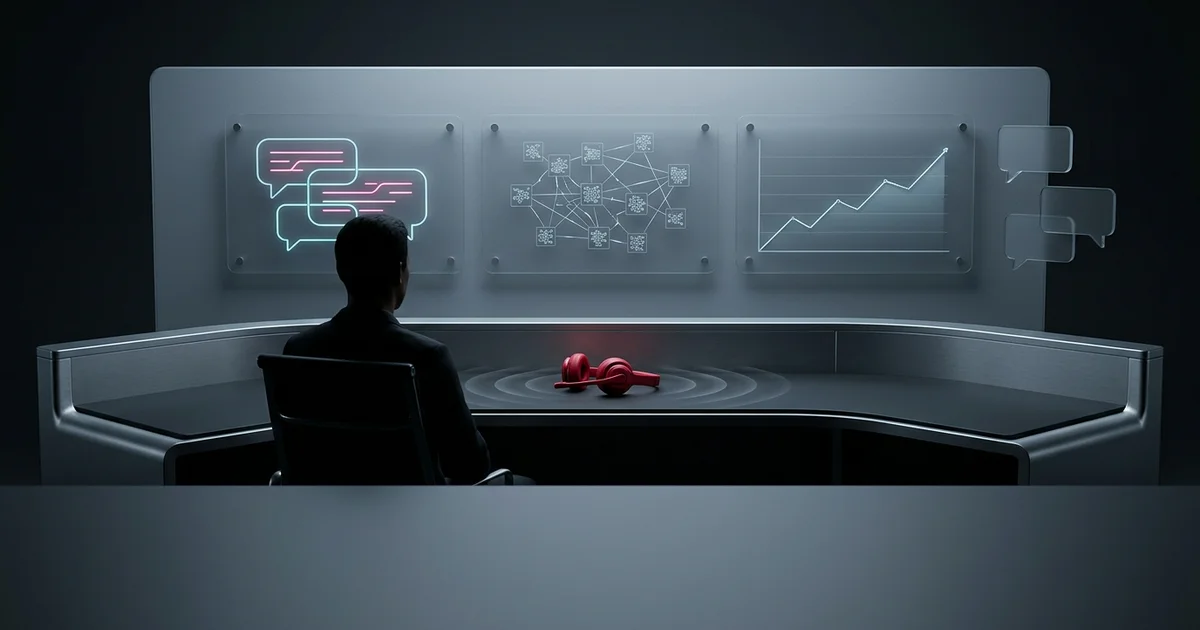
AI chatbots for support and sales
We build chatbots for business: we bring chat, Telegram, WhatsApp, and email into one scenario, answer from your knowledge base and order history, and hand the operator a transcript, the reason, and the next step.
One bot answers in chat, messengers, and email, grounds replies in your documents, and hands a hard dialog to an operator with context.
Pricing
from ₽600,000
per project
This is the lower bound of a project. We scope the exact quote after a brief: it depends on volume and the number of integrations.
Capabilities
One bot across channels
The bot takes website chat, Telegram, WhatsApp, and email in one scenario: the customer writes in a familiar channel, and the team sees a single history.
Answers from documents and orders
The answer comes from the knowledge base and order history. The bot attaches a link to the document or CRM record for every fact, so an operator checks the source in one click.
Handoff with context
When the bot reaches the edge of a scenario, the operator gets the transcript, the reason, and the next step. The customer continues the conversation without retelling the story.
Quality dashboard
We track the auto-answer share, escalation count, and dialog sentiment. The metrics show which topics the bot closes itself and where the scenario needs work.
From request to result
1
Request audit
We review topics, frequency, and channels: we read a month of exports, find recurring questions, and estimate the auto-answer share.
2
Scenarios and knowledge base
We build the scenario map, edit documents for answers, and assign a knowledge owner. Here we fix the auto-answer boundaries and operator handoff points.
3
Integrations
We connect channels, the CRM, and the knowledge base: webhooks, order sync, and access rights to customer data.
4
Pilot and launch
For two weeks the bot runs on dialogs from one queue. We compare auto-answers with operator ratings, fix scenarios, and roll the bot out to other channels.
Check if it fits you
Good fit
A high volume of repetitive requests
Support and sales get hundreds of similar questions about orders, payment, and delivery. The bot takes that load and frees operators for complex topics.
A knowledge base with an owner
You have documents, policies, and FAQ answers, plus a person who keeps them current and approves edits.
Not a fit
No knowledge owner
Documents update at random and contradict each other. We assign an owner first, then build scenarios and answers.
Complex price negotiation
Discounts, bargaining, and custom terms stay with a manager. The bot prepares a customer summary and passes the dialog to a person.
What you get
82%
requests without an operator
The agent handled chat and email requests, pulled orders from the CRM, and answered on delivery status. Operators took non-standard cases, and request processing time fell by 70%.
82%
82% of requests without an operator
In an online store project, the agent closed 82% of requests without an operator and cut processing time by 70%. It handled chat and email, pulled orders from the CRM, and passed complex cases to operators.
24/7
Round-the-clock support
The bot answers in chat and email around the clock, and an operator joins complex dialogs with ready context. Night and weekend requests get an answer in the same minute.
2 wks
A two-week pilot
We run the pilot on one channel and one queue: in two weeks we collect auto-answer statistics, fix scenarios, and show the economics.
What the delivery includes
Scenario map
A scenario map of topics, branches, and auto-answer boundaries with operator handoff points. It shows which requests the bot closes itself and which go to a person.
Connected channels
Website chat, Telegram, WhatsApp, and email are connected to one scenario. Conversation history and customer data reach the CRM through webhooks.
Quality dashboard
A dashboard with the auto-answer share, escalation count, sentiment, and a list of topics to improve. You plan scenario edits and operator load from it.
How the system is built
Channel routing
A webhook takes a message from chat, Telegram, WhatsApp, or email and normalizes it into one format. The router detects the topic and language, so the dialog continues in the channel the customer chose, and the operator sees one history.
RAG over documents and orders
The bot looks for an answer in the knowledge base and order history: pgvector finds close fragments, and PostgreSQL returns the order status. The model builds the answer from the facts and attaches a source link for a check.
Escalation with context
When a scenario reaches its edge, the bot assembles the transcript, the escalation reason, and the next step. The operator gets a card with the history and continues the dialog from where the customer stopped.
Where the solution pushes back
- 01
Scenarios are refined on real dialogs
We build the first scenario from conversation exports, and exact wording appears after two weeks on real dialogs. The pilot shows topics to expand.
- 02
The knowledge base needs an owner
Answers stay current when the base has an owner: they approve edits, retire outdated documents, and watch for contradictions. The edit queue shows up in the dashboard.
- 03
Complex and money cases stay with a person
Discounts, refunds, and disputed charges stay with a manager: the bot gathers context and passes the dialog with its history. The boundary keeps money decisions under control.
Technologies
The technologies we use in our work and their role in a project.
Channels, knowledge, and dialog state
The bot connects to Telegram Bot API and WhatsApp Cloud API, keeps orders in PostgreSQL, searches the knowledge base through pgvector, and holds the dialog in Redis.
Cost calculator
This is an indicative range, not a quote. We scope the exact estimate after a brief: it depends on volume and the number of integrations.
Channels
Scenarios
Multilingual support
Add-ons
Support
Year one: updates and monitoring, a reply within 2 business days.
Service
AI chatbots for support and sales
The estimate covers our team's work. Hardware, third-party service licences and travel are added on request.
Estimated cost
₽800,000
Timeline
6 wk
Frequently asked questions
Which channels does the bot support?
Website chat, Telegram, WhatsApp, and email. We connect channels through APIs and webhooks, so the conversation history stays in one customer card.
Where do the answers come from?
From your documents, policies, and order history. The model answers from retrieved fragments and shows a source link for a check.
How long does the launch take?
A pilot on one queue takes two weeks. A full launch with several channels starts at six weeks and depends on the number of integrations.
What happens when the bot cannot answer?
It hands the dialog to an operator with the transcript, the reason, and the next step. The operator's answer joins the knowledge base as a candidate for a scenario.
What teams add to this service
Related Services
Part of Solutions
Implementation Examples
−70%
Request handling time
Ready to discuss your task?
Leave a request – we'll get back with a proposal and a preliminary estimate.
Contact us