 Login AI

AI Infrastructure Design
Design and deployment of computing infrastructure for artificial intelligence workloads. Implementation of semantic search systems, inference cost optimization, and trade secret security.
Integrating large language models into closed corporate perimeters with guaranteed data protection.
Pricing
from ₽2,500,000
per project
This is the lower bound of a project. We scope the exact quote after a brief: it depends on volume and the number of integrations.
Capabilities
Anti-hallucination guardrails
Strict isolation of AI models within verified local company documents.
Operating cost control
Efficient semantic caching preventing redundant repeated token submissions.
Data security
Deployment of search perimeters and databases within the organization's private boundary.
Hybrid search
Simultaneous consideration of semantic information similarity and exact identifier matches.
From request to result
1
Data audit
Evaluation of the structure, volume, and quality of corporate information intended for indexing.
2
Perimeter design
Selection and deployment of vector DBMS, HNSW index parameter tuning, and chunking strategies.
3
Pipeline assembly
Integration of caching systems, reranking mechanisms, and prompt engineering frameworks.
4
Testing and launch
Enabling distributed tracing, verifying hallucination prevention, and fixing SLAs.
Check if it fits you
Good fit
Enterprises with developed knowledge bases
Organizations with significant volumes of closed internal regulations, technical documentation, and archives.
Fintech and legal platforms
Products and internal services requiring automated analysis of complex contracts with absolute precision.
Large e-commerce aggregators
Marketplaces implementing intelligent multilingual search across millions of distributed product cards.
Customer support teams
Automation loops for first- and second-line user answers based on accumulated ticket history.
Not a fit
Companies without accumulated data
New projects lacking unique text knowledge bases, proprietary regulations, or process history.
Linear automation scenarios
Interaction systems where rigid programming condition trees are sufficient to close tasks.
Products without infrastructure budget
Early prototypes planning to use exclusively public APIs without local information caching.
Dynamic real-time interfaces
Transaction processing or market quote services where data becomes outdated every second.
What you get
−80%
LLM token expense
Proven result of AI infrastructure optimization through semantic caching and context window control.
What the delivery includes
Cleansing and indexing
Cleansing and indexing: we gather unstructured data, drop duplicates, and build a vector index with metadata.
Hybrid search
Vector and full-text search work together, and we rerank the result so the answer rests on exact fragments.
Semantic cache
A semantic cache answers repeated questions from memory, so the cost of external calls drops.
Tracing and budget
Tracing and budget: we see the answer path and the per-step cost, and limits and alerts keep spend in check.
How the system is built
Analysis and preprocessing
Analysis and preliminary processing turns unstructured text, files, and internal documentation into a clean, structured dataset. We normalize formats and remove noise, so the index starts from reliable material your team can trust.
Cleansing source data
Cleansing source data strips duplicates, system noise, and broken characters before indexing begins. The result is one clean source table that feeds the vector store, so search returns even, accurate matches for every query.
Optimal document chunking strategies
Optimal document chunking strategies split long files into logical fragments that keep their context and meaning. We tune chunk size to your documents, so answers rest on coherent passages with complete context.
Generating vector embeddings
Generating vector embeddings gives your documents a numeric representation built with models tuned to your domain. The vectors capture meaning and industry language, so semantic search finds the right fragment when wording differs.
HNSW graph geometry in vector stores
HNSW graph geometry sets how vectors link inside the store and speeds up nearest-neighbor search. We tune graph parameters to your data volume, so the right fragment arrives in milliseconds.
Automatic vector index updates
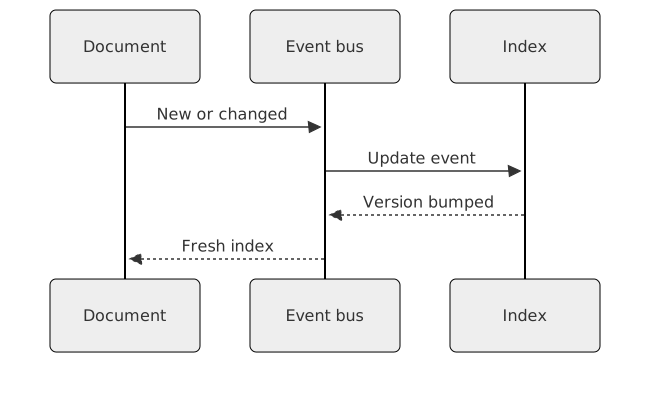
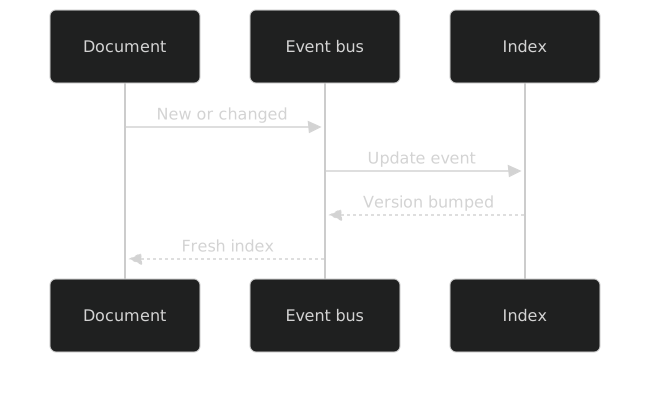
Automatic vector index updates run whenever a source document changes or a new file arrives. The index stays current through the event stream, so search returns fresh answers from the latest data.
Semantic caching systems
Semantic caching systems answer repeated queries instantly from memory by measuring how close their meaning is. The cache holds frequent questions, so you cut external calls and keep response times low.
Reranking search results
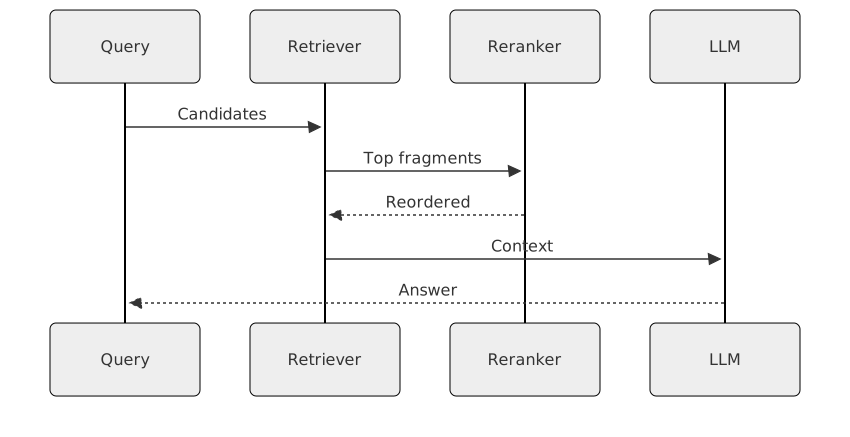
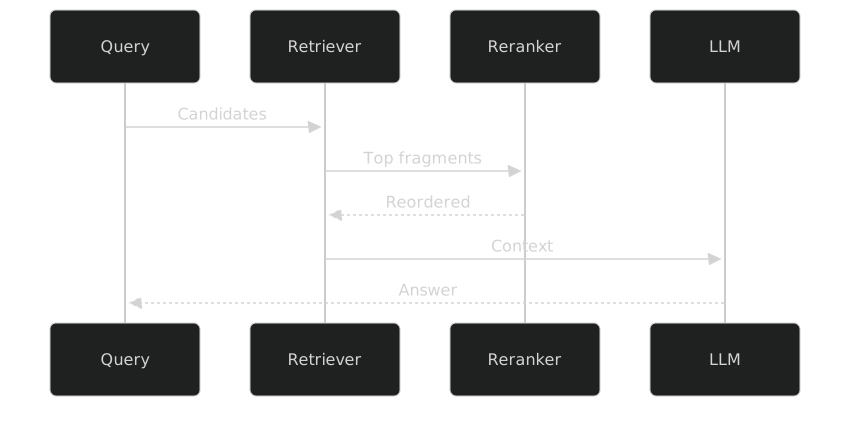
Reranking search results lifts the most relevant fragments to the top and improves answer accuracy. The reranker scores each candidate, so the model builds its answer from the best passages on hard queries.
Custom system prompt instructions
Custom system prompt instructions define the model's role, answer format, and rules for your workflow. We draft and test these templates with your team, so replies follow a predictable structure on every task.
Dynamic context window limiting
Dynamic context window limiting sets the request size against current provider limits and your budget. The system trims context to the relevant parts, so you control token spend and the model keeps answer quality.
End-to-end distributed tracing
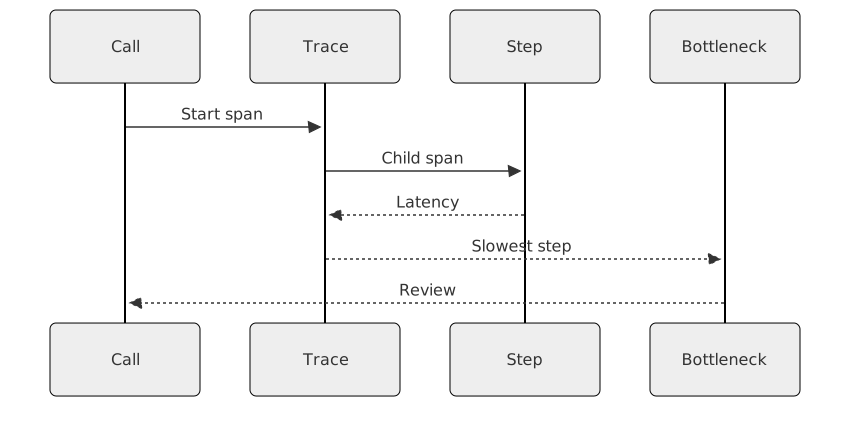
End-to-end distributed tracing follows every call chain and shows where latency builds up. We turn on tracing across the pipeline, so you spot the slow step and keep response times under control.
Automated token cost auditing
Automated token cost auditing tallies spend per request and forecasts load week by week. We set up the audit, so you read the budget in numbers and catch rising model costs early.








Technologies
The technologies we use in our work and their role in a project.
Vector layer and semantics
To handle complex knowledge bases, high-performance vector databases like Qdrant or specialized extensions like pgvector for PostgreSQL are deployed. Transforming unstructured documents into high-dimensional mathematical vectors is optimized via isolated Embeddings API instances that prevent index drift.
Orchestration and observability
Context window management and hybrid search run on lightweight native layers. Request cost monitoring, prompt logging, and real-time execution trace debugging are integrated via Langfuse. The whole run stays transparent end to end.
Cost calculator
This is an indicative range, not a quote. We scope the exact estimate after a brief: it depends on volume and the number of integrations.
Nodes
GPU class
Storage layer
Add-ons
Support
Year one: updates and monitoring, a reply within 2 business days.
Service
AI Infrastructure Design
The estimate covers our team's work. Hardware, third-party service licences and travel are added on request.
Estimated cost
₽3.7M
Timeline
8 wk
Frequently asked questions
How does the architecture protect against hallucinations?
The model is isolated within the provided RAG context retrieved from the vector database. It is forbidden to use hidden training weights for generating facts, and a prompt instructor blocks answers when relevant text fragments are not found locally.
How does semantic caching lower operational costs?
Deploying a semantic cache at the infrastructure level intercepts most recurring queries by determining semantic proximity from RAM. This eliminates the need to repeatedly send heavy contexts to external LLM services.
How is commercial secret security ensured?
The entire vector database, document parsers, and search engines are deployed within the client's secure private perimeter. External inference APIs receive only anonymized and isolated text fragments stripped of personal information.
How does the project start?
The project starts with a data audit: which sources exist, who owns them, and how often they change. From there we choose the chunk, metadata, and search scheme.
What teams add to this service
Related Services
Implementation Examples
×4.5
Stream data processing speed
Ready to discuss your task?
Leave a request – we'll get back with a proposal and a preliminary estimate.
Contact us