 Login AI
AI document processing
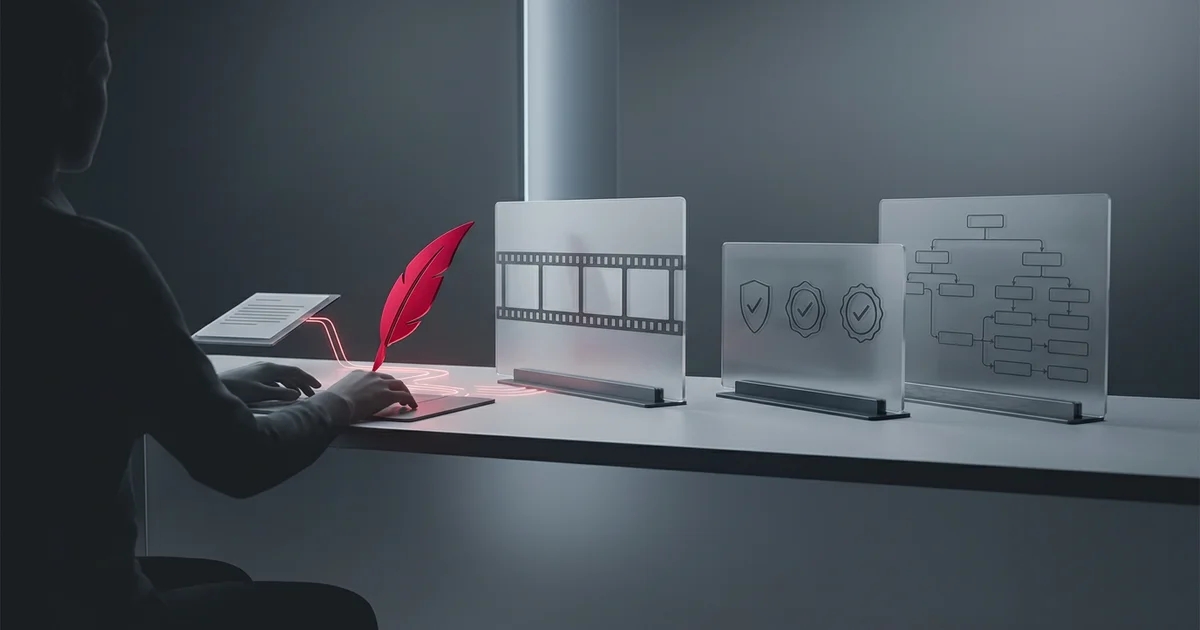
We build a pipeline from scan to structured record: OCR, field extraction, validation rules, and loading into ERP or CRM. The pilot measures accuracy for every field.
We recognize scans and PDFs, extract fields, and validate data before it reaches your business system.
Pricing
from ₽800,000
per project
This is the lower bound of a project. We scope the exact quote after a brief: it depends on volume and the number of integrations.
Capabilities
Recognition
We recognize printed and handwritten documents: invoices, acts, contracts, and delivery notes. Each type gets a fixed language, scan quality, and error tolerance.
Field extraction
We extract requisites, amounts, dates, and table rows into JSON. The field schema matches the business system, so data reaches ERP without manual retyping.
Data validation
We check amounts, tax IDs, and dates against rules and reference data. A document with a mismatch goes to a human, and the rest pass automatically.
Loading into the system
We send the result to ERP, CRM, or an archive through an API. Every document gets a status and a link to the source file.
From request to result
1
Document type audit
We collect document types, volume, and scan quality. We fix the fields the business system needs.
2
Labeling and schema
We label a reference sample and describe the field schema. Each field gets a validation rule.
3
Pipeline
We assemble OCR, extraction, and validation into one flow. We connect the business system API and the queue.
4
Pilot
We run the pipeline on a real stream and measure accuracy. We tune the threshold and the manual review share.
Check if it fits you
Good fit
500+ documents a month
The stream is large enough for automation to pay for setup. At that volume errors show up in the first week.
Reference documents exist
You can provide 50–100 labelled documents. We measure accuracy on them and tune the review threshold.
Not a fit
Handwritten forms without references
Handwritten forms need a labelled sample. Without one, accuracy stays a guess, and manual review eats the effect.
No process owner
The pipeline changes accounting or operations work. You need a person who approves rules and signs off.
What you get
1
1 document type
The base scope includes one document type. Each extra type adds fields, rules, and a reference sample.
50
50 documents
We test the pilot on 50–100 documents from your stream. That sample measures accuracy and the share of automatic loads.
4 wk
4 weeks
The first pipeline launches in four weeks. The timeline covers the audit, labelling, pipeline, and a pilot on the real stream.
What the delivery includes
Pipeline
The pipeline takes a file, recognizes it, extracts fields, and returns JSON. Code and configuration stay with your team.
Field schema
The schema describes types, required fields, and validation rules. It matches the fields of the business system.
Accuracy report
The report shows accuracy per field on the reference sample. Errors are split by document type and scan quality.
Checks before kickoff
Document types
The scope fixes the type list from the audit. Each type gets 30–50 reference documents and a field list.
Fields
The field list matches the ERP record: amounts, dates, counterparties, numbers, and table rows.
Rules
We check required fields, arithmetic, and reference data. A rule with a mismatch sends the document to manual review.
Integration
Integration with ERP runs through an API or a queue. The document gets a status, and the source file stays in storage.
How the system is built
Pipeline
The pipeline takes a file, checks the format, and sends pages to OCR. The output is text with block coordinates, so the model sees table structure tied to the page.
Model
The model maps text to the field schema and returns JSON with a confidence score per value. The schema sets types and required fields, so the result is ready for loading.
Rules
Rules check amounts, dates, and counterparties against reference data. A document with a mismatch gets a status and goes to an operator, while the rest load into the business system.
Where the solution pushes back
- 01
Scan quality
OCR accuracy depends on resolution and scan quality. The audit measures the share of readable documents and shows which types need preprocessing.
- 02
Handwritten fields
Handwriting is harder than print. For those fields we add human review and collect reference examples.
- 03
Human review
Human review covers documents above the error threshold. An operator checks them, and that share falls as the model learns.
Technologies
The technologies we use in our work and their role in a project.
Document pipeline
We receive files in MinIO, recognize and extract fields with Python and an OpenAI API model, run checks in PostgreSQL, and queue processing in Airflow.
Cost calculator
This is an indicative range, not a quote. We scope the exact estimate after a brief: it depends on volume and the number of integrations.
Document types
Monthly volume
Target accuracy
Manual review
Add-ons
Support
Year one: updates and monitoring, a reply within 2 business days.
Service
AI document processing
The estimate covers our team's work. Hardware, third-party service licences and travel are added on request.
Estimated cost
₽1.1M
Timeline
5 wk
Frequently asked questions
How much does document processing cost?
The base program starts at RUB 800,000 and covers one document type, extraction, and validation. Extra types and accuracy targets affect the estimate.
How accurate is OCR?
On quality scans printed text reaches 95–99% accuracy per field. Handwritten fields and poor scans need human review, and we name the exact figure after the pilot.
What about document security?
Files live in your environment or an agreed cloud. Field access is role-based, and the log shows who opened a document.
How does it fit ERP?
We connect an API or an exchange queue. The document gets a status, and extracted fields reach the record without manual retyping.
What teams add to this service
Related Services
Part of Solutions
Implementation Examples
−90%
Discrepancies in reports
Ready to discuss your task?
Leave a request – we'll get back with a proposal and a preliminary estimate.
Contact us