 Login AI
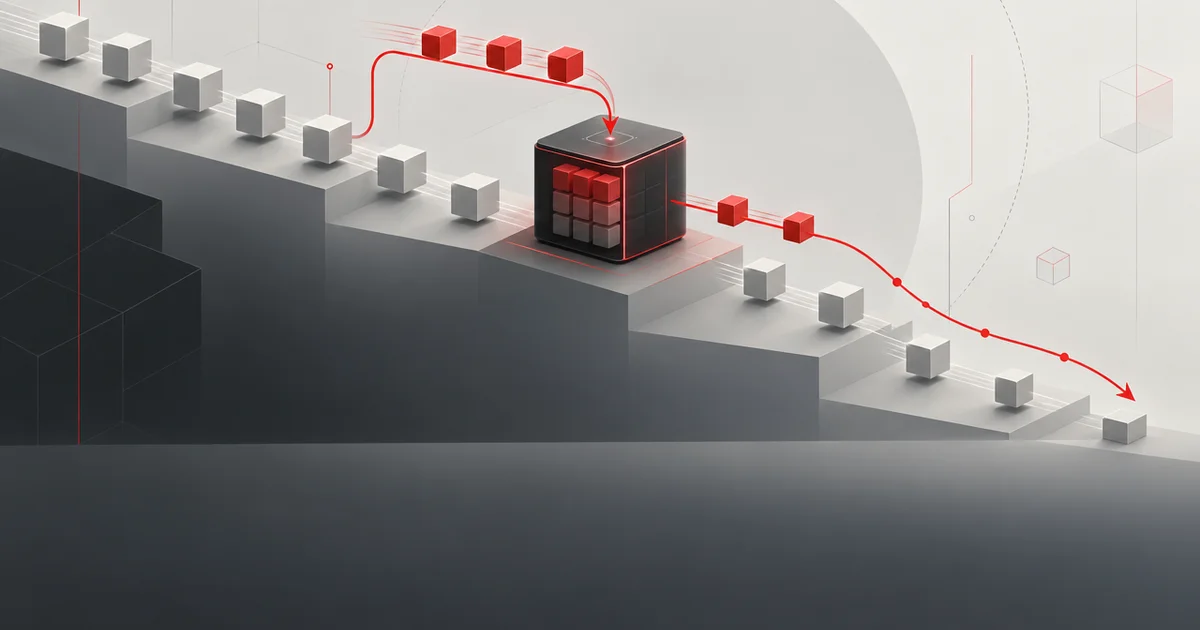
Optimizing AI infrastructure and token cost
We break down LLM load step by step, find repeated and redundant calls, and add caching, batching, and model routing. The inference bill drops and quality stays put.
We measure where tokens go and cut the bill without losing answer quality.
Pricing
from ₽400,000
per project
This is the lower bound of a project. We scope the exact quote after a brief: it depends on volume and the number of integrations.
Capabilities
Step-by-step audit
We break down the request chain: where tokens go to a useful answer and where to resending context.
Semantic cache
Repeated questions are answered from memory instead of an external call, with a cache version per document.
Model routing
Simple phrases go to a cheap model, complex requests to a strong one, by rules in the code.
Budget and alerts
A per-project limit and an alert when cost grows the same day, not in the bill at month end.
From request to result
1
Profiling
We collect calls for a period and break them down: input tokens, output tokens, repeats, and cache share.
2
Optimization plan
We fix where to cut: cache, batching, routing, and prompt compression, with an effect estimate.
3
Implementation
We add cache and routing and move part of the calls to a local model without breaking answers.
4
Budget control
We turn on limits and alerts, compare the bill before and after, and record the saving in numbers.
Check if it fits you
Good fit
Call logs exist
They show per-step spend; without logs we turn on tracing first.
Steady load
Repeated requests get cached and routed; the effect shows in the second week.
Not a fit
A one-off experiment
With dozens of calls a month, optimization does not pay off.
No metrics collected
If cost and latency are not measured, we add observability first.
What you get
−55%
of the token bill
After caching and routing, external calls dropped while answer quality stayed the same.
What the delivery includes
A call profile report
The output is a per-step call table with tokens, repeats, and cache share. It shows every source of spend without a manual log dig.
A cost map
We count the cost per model and prompt, so you see which part of the bill adds value and which goes to repeats.
A work plan
We fix what changes: cache, batching, routing, and prompt compression. The plan sets the order of work and the expected effect in money.
A saving measurement
We compare the bill before and after on one task set and show the saving in money. The measurement rests on your calls and your rates.
How the system is built
Call profile
We break the calls down step by step: input and output tokens, repeats, and cache share. The profile shows exactly where the budget goes.
Routing and cache
Simple requests go to a cheap model and the semantic cache, while complex ones stay with the strong model. An engineer sets the routing rules.
Measurement before and after
We measure answer metrics and cost on one task set before and after the change, so the effect shows up in real numbers. The same tasks make the comparison honest.
Budget control
Budget control goes in with the optimization: limits and cost alerts show growth on the day of a spike. You see the overrun the same day it appears, and the month-end bill confirms it.


Where the solution pushes back
- 01
Resending context
The model rereads history and documents on every step, and you pay for it again. Resending context is the main line of the bill.
- 02
A strong model on simple phrases
Greetings, clarifications, and typos are handled by a strong model where a cheap one would do. An oversized model on simple phrases inflates the budget.
- 03
An uncompressed prompt
Fragments spare for the answer land in the context, and every one of them costs tokens. Prompt compression removes that spend and lowers the bill.
- 04
A missing cache
The same policy question goes to the provider again although the answer already existed. A cache answers from memory and removes repeated calls.
- 05
A cache needs repeats
In a product where questions repeat rarely, a cache only adds a vector search. A cache pays off where similar requests come back regularly.
- 06
Chunk size to the document
A chunk that is too small breaks context and one that is too large drags spare tokens. We tune chunk size to the document to keep meaning and cost in balance.
- 07
Routing needs labeling
An engineer sets which requests count as simple, and someone has to maintain those rules. Routing needs labeling and a regular review of the rules.
- 08
Saving and quality
If the task needs the strong model, the cheap one gives a worse answer. Saving and quality are linked, and metrics show the line where cutting stays safe.
Technologies
The technologies we use in our work and their role in a project.
Metrics, cache, and inference
Per-step cost is collected by Langfuse, the cache lives in Redis, inference is served by vLLM, metrics come from Prometheus, and history is stored in PostgreSQL.
Cost calculator
This is an indicative range, not a quote. We scope the exact estimate after a brief: it depends on volume and the number of integrations.
Accounts
Optimization depth
Reserved and rightsizing
Add-ons
Support
Year one: updates and monitoring, a reply within 2 business days.
Service
Optimizing AI infrastructure and token cost
The estimate covers our team's work. Hardware, third-party service licences and travel are added on request.
Estimated cost
₽640,000
Timeline
3 wk
Frequently asked questions
Will quality drop?
We measure answer metrics before and after. Cache and routing leave complex requests alone, so any drop shows at once and is rolled back.
How long does the audit take?
Profiling for a period takes two days; the optimization plan takes a week.
Do you need production access?
Call logs and metrics are enough. We touch production only during the rollout.
What if there is no saving?
We show the estimate before the rollout. If there is no effect, we do not start.
How fast does optimization pay off?
We estimate payback on your call profile: cost before and after, works included. Under steady load the effect shows in the first weeks; for a one-off we say honestly that it will not pay off.
What does the audit include?
The audit covers a per-step call profile, a cost map by model and prompt, an optimization plan, and an effect estimate in money. It is a report with numbers you can decide on, not generic advice.
Is a local model required?
No. Local inference matters when volume cost or data confidentiality demands it. If the cloud covers the tasks cheaper, we keep the cloud and optimize the calls.
What teams add to this service
Ready to discuss your task?
Leave a request – we'll get back with a proposal and a preliminary estimate.
Contact us