 Login AI
Prompt engineering for business
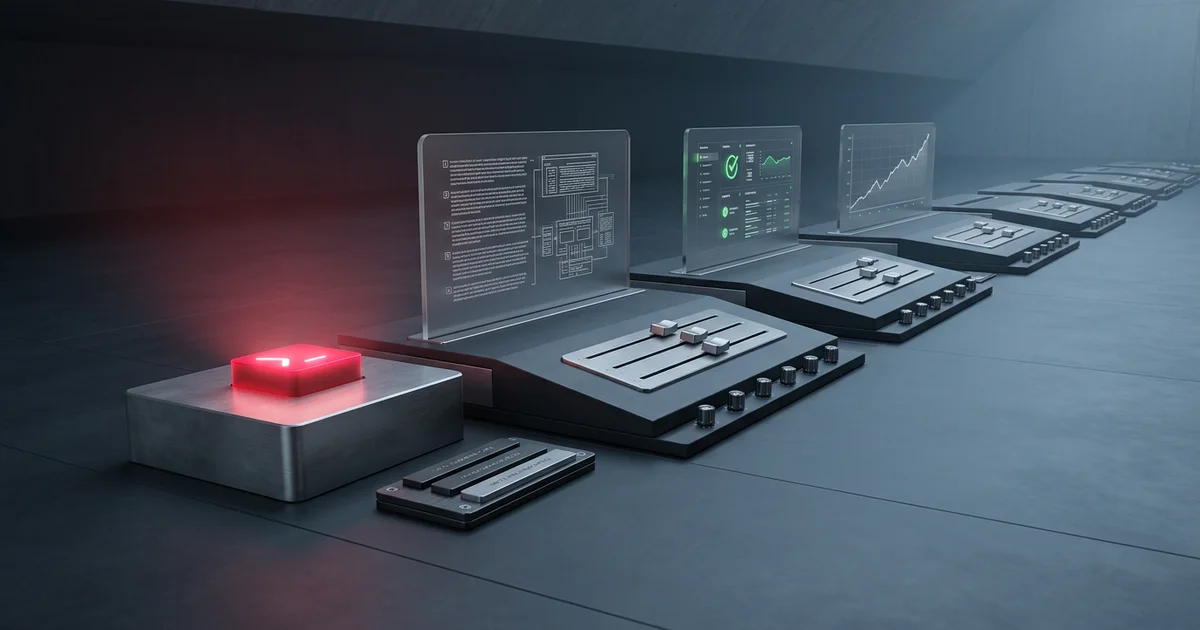
We build prompts by scenario, cover them with tests and rules, and give the team templates, metrics, and an update process. Prompts live next to the tests, so every change goes through review.
We turn prompts into a versioned library, backed by tests and guardrails.
Pricing
from ₽250,000
per project
This is the lower bound of a project. We scope the exact quote after a brief: it depends on volume and the number of integrations.
Capabilities
Prompt library
We build prompts by scenario: support, sales, internal tasks. Every prompt has a version, an owner, and a purpose.
Tests
We build a set of requests with reference answers. We measure accuracy, completeness, and cost for every version. One command runs the tests and returns a report by scenario.
Guardrails
We describe blocked topics, formats, and data limits. Checks run before and after the model.
Team handover
We show how to update a prompt and run the tests. The team runs the library without us. The handover includes a short process and a walkthrough of two changes.
From request to result
1
Scenarios
We review tasks, audience, and data. We pick scenarios where a prompt produces a measurable effect.
2
Prompts
We write the first prompt version and fix the answer format. Each scenario gets an owner.
3
Tests
We collect reference requests and answers. We run the versions and compare metrics.
4
Rollout
We connect the library to the application and hand it to the team. We set up updates and test runs.
Check if it fits you
Good fit
3+ scenarios
The model runs in support, sales, or internal tasks. Several scenarios make the library pay off.
A model API exists
The application already calls a model. We connect to the same API and keep the architecture.
Not a fit
A couple of prompts
Two or three requests need point tuning. A library and tests matter when the number of scenarios grows.
No prompt owner
The library needs a person who approves changes. Without an owner, prompts scatter across the team.
What you get
30
30 prompts
The base library covers up to 30 prompts from three scenarios. Each has a version and an owner.
100
100 tests
The test set holds up to 100 requests with reference answers. It compares prompt versions.
2 wk
2 weeks
We build the first library in two weeks. The timeline covers scenarios, prompts, and the first test run.
What the delivery includes
Library
The library stores prompts by scenario with versions and owners. Any version can be compared with the previous one.
Test set
The test set holds requests and reference answers. It measures quality and cost for every version.
Guardrail pack
The guardrail pack describes blocked topics, formats, and data limits. Checks are built into the model call.
How the system is built
Scenarios
We review tasks and collect scenarios where the model already runs. Each scenario gets an input, an expected answer, and a metric for quality.
Tests
Tests collect requests and reference answers into one set. A run on a new version shows accuracy, completeness, and cost, so a prompt change rests on numbers.
Guardrails
Guardrails check model input and output against rules. Blocked topics and formats are stopped, and an incident lands in the log with the prompt version and request.
Where the solution pushes back
- 01
Model quality
A prompt sets the frame, and model quality sets the ceiling. Tests show where a prompt helps and where another model is needed.
- 02
Cost
A long prompt and a large context raise the bill. We measure request cost and cut instructions that add nothing. Cost is measured per request and per monthly volume. The report directly compares request cost with the previous version.
- 03
Updates
Prompt updates move together with the model and data. The library needs an owner and regular test runs.
Technologies
The technologies we use in our work and their role in a project.
Prompts and checks
We store prompt versions in PostgreSQL, call the model through OpenAI API, and collect traces in Langfuse to see the quality and cost of each request.
Cost calculator
This is an indicative range, not a quote. We scope the exact estimate after a brief: it depends on volume and the number of integrations.
Scenarios
Prompts
Quality evaluation
Team training
Add-ons
Support
Year one: updates and monitoring, a reply within 2 business days.
Service
Prompt engineering for business
The estimate covers our team's work. Hardware, third-party service licences and travel are added on request.
Estimated cost
₽410,000
Timeline
4 wk
Frequently asked questions
How much does prompt engineering cost?
The base program starts at RUB 250,000 and covers three scenarios, the library, and the test set. The number of prompts and checks affects the estimate.
How long does it take?
Two to three weeks for three scenarios and 20 prompts. Tests and guardrails add a week.
How is it different from training?
Prompt engineering delivers the library and tests. Team training explains how to use them and runs as a separate program.
What happens when the model changes?
The library and tests let you compare a new model on the same requests. The switch decision rests on metrics.
Can we update prompts without a developer?
Yes, the library and tests are built for a product team. The prompt owner edits the text, runs the tests, and compares metrics with the previous version. A developer steps in when the answer format or integration changes.
What teams add to this service
Related Services
Part of Solutions
Ready to discuss your task?
Leave a request – we'll get back with a proposal and a preliminary estimate.
Contact us