 Login AI
Building deterministic RAG systems
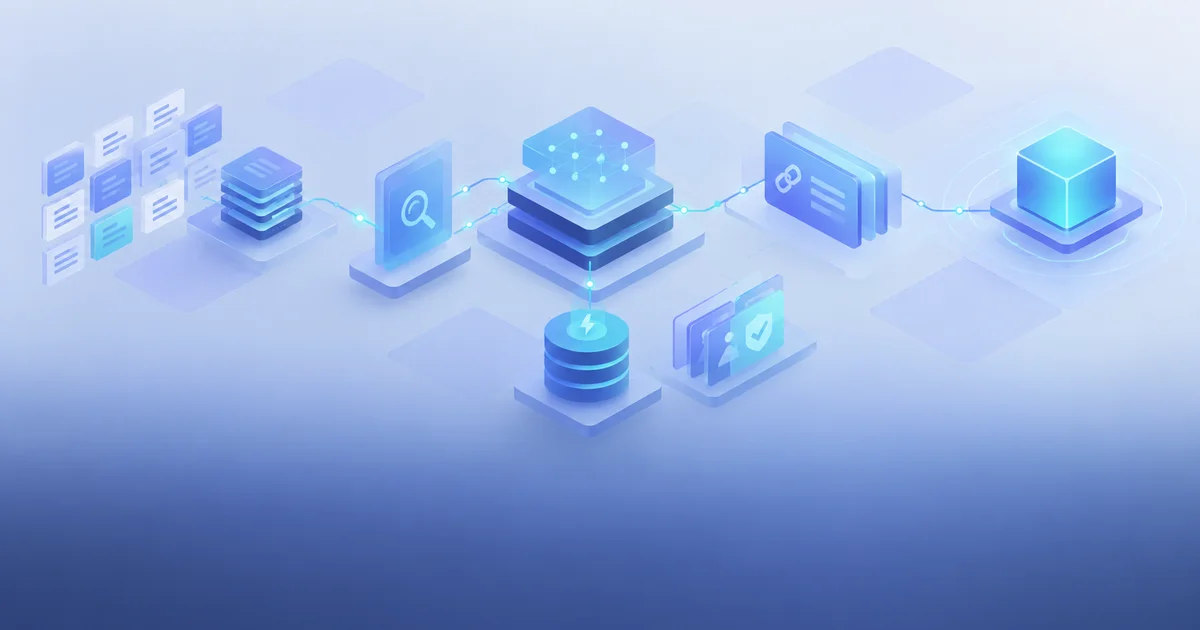
We build a RAG loop with hybrid search, a semantic cache, and tracing: the model receives only verified fragments, and every answer is traceable to its source.
The model answers from 3–4 verified fragments and cites each source.
Pricing
from ₽1,500,000
per project
This is the lower bound of a project. We scope the exact quote after a brief: it depends on volume and the number of integrations.
Capabilities
Hybrid search
Meaning and exact identifiers such as part numbers, dates, and names are searched together, not separately.
Verifiable source
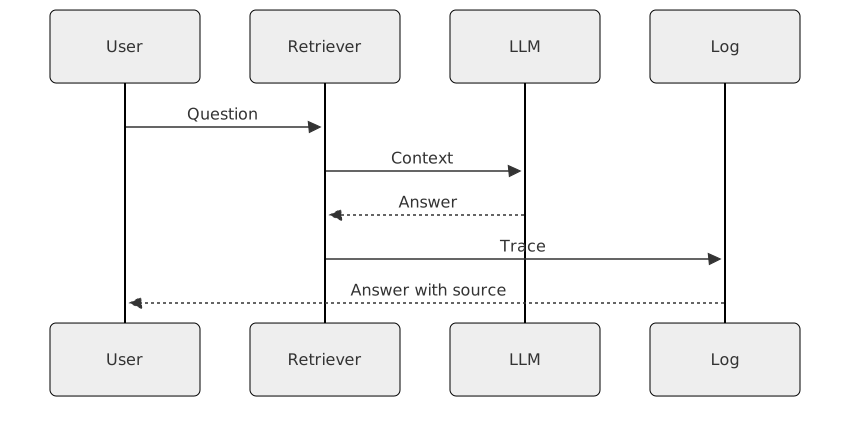
Every answer links to a specific fragment; without a source the system marks the answer as coming from memory.
Semantic cache
Repeated questions are answered instantly, and the cache version resets when a document updates.
De-identification on exit
Only fragments without personal data leave the perimeter, and the trace logs show it.
From request to result
1
Knowledge audit
We review sources, structure, and access rights: what may be given to the model at all.
2
Chunk schema
We split documents by structure and fix metadata: version, source, rights.
3
Building the loop
We bring up hybrid search, cache, and tracing, and close external calls with de-identification.
4
Quality benchmarks
We measure the share of answers with a source link and retrieval accuracy on your question set.
Check if it fits you
Good fit
A large document archive
Policies, contracts, and support history do not fit the context but are needed for answers.
Frequent repeated questions
The same topics come back: the semantic cache takes load off external inference.
Not a fit
Documents change daily
With a daily index rebuild, cache and versions need a separate pipeline, which is another scope.
No owner of the knowledge base
If no one owns the sources, stale documents land in answers alongside fresh ones.
What you get
70–80%
requests served from the semantic cache
Answers linked to a specific policy section, and repeated questions were closed by the cache.
What the delivery includes
A source audit
A source audit shows which documents exist, who owns them, and how often they change. Base freshness becomes manageable.
A chunk and metadata schema
Each fragment gets a structure, a version, and access rights. A chunk and metadata schema keeps search predictable.
Hybrid search and cache
Vector and full-text search work together, and the cache threshold is set separately. Hybrid search raises the chance of an exact answer.
Tracing and de-identification
The answer path shows in the logs, and personal data is stripped on exit. Tracing and de-identification go with the output filters.
Benchmarks on your questions
We measure the share of answers with a source link and retrieval accuracy on your question set. Benchmarks show real quality before launch.
How the system is built
Offline indexing
Documents are indexed offline, so answer quality stays stable under any current traffic. Latency of the external channel affects such an answer only slightly.
Hybrid search
Hybrid search closes both failures: vector search misses a part number, full-text misses a synonym, and together they catch both.
Answer tracing
Tracing shows the answer path: which fragment was found, what the request cost, and at which step the source was lost.
Event-based versions
Index versions switch on an event: a policy update reindexes only the changed part of the archive, while the rest of the array keeps its previous version.




Where the solution pushes back
- 01
Chunking decides a lot
Chunking decides a lot: too small a chunk breaks context and too large a one blurs the model's attention, and both give a wrong answer.
- 02
The cache returns a close answer
The semantic cache can return a past answer to a vector-close question: the threshold stays high and hits are logged.
- 03
Pattern-based de-identification
De-identification works on patterns: regexes catch email and phones, while free text needs manual sampling. Full guarantees cover structured fields.
- 04
Access rights in the metadata
Access rights live in the fragment metadata: without them, search returns documents closed to that user as well.
- 05
The knowledge base owner
The knowledge base owner is responsible for source freshness. The owner sets the refill rules, or the base goes stale.
- 06
Access rights
Access rights define who sees which documents. Access rights are set up front, or search returns documents closed to a user.
- 07
Source quality
Scans without a text layer and duplicates lower retrieval accuracy. Source quality sets the accuracy ceiling for the whole system.
- 08
The update rule
The update rule names the event that triggers a rebuild of the index version. The rule keeps the index fresh and assigns an owner.
Technologies
The technologies we use in our work and their role in a project.
Search and observability
Search runs on Qdrant or pgvector, the step chain is collected by Langfuse, document updates go through Kafka, and index versions are stored in PostgreSQL.
Cost calculator
This is an indicative range, not a quote. We scope the exact estimate after a brief: it depends on volume and the number of integrations.
Data sources
Retrieval
Evaluation
Add-ons
Support
Year one: updates and monitoring, a reply within 2 business days.
Service
Building deterministic RAG systems
The estimate covers our team's work. Hardware, third-party service licences and travel are added on request.
Estimated cost
₽2.1M
Timeline
6 wk
Frequently asked questions
How is this different from plain RAG?
We do not send the whole archive into context: the model gets 3–4 verified fragments and a source link.
What if the needed fragment is missing?
The system marks the answer as coming from memory instead of presenting it as retrieved from documents.
How often should the index be rebuilt?
On an event: a new document revision triggers a version rebuild, not a full reindex.
Does data leave the perimeter?
Only de-identified fragments; parsing, indexing, and search stay inside the loop.
Can several sources be connected?
Yes, connectors collect documents from several systems, and rights are checked at the fragment metadata level.
What about running costs?
The main cost is external inference on answers the cache does not hold. Rebuilds run on an event, not a schedule, so you pay for real changes.
What teams add to this service
Ready to discuss your task?
Leave a request – we'll get back with a proposal and a preliminary estimate.
Contact us