 Login AI
Integrating AI agents with a task tracker
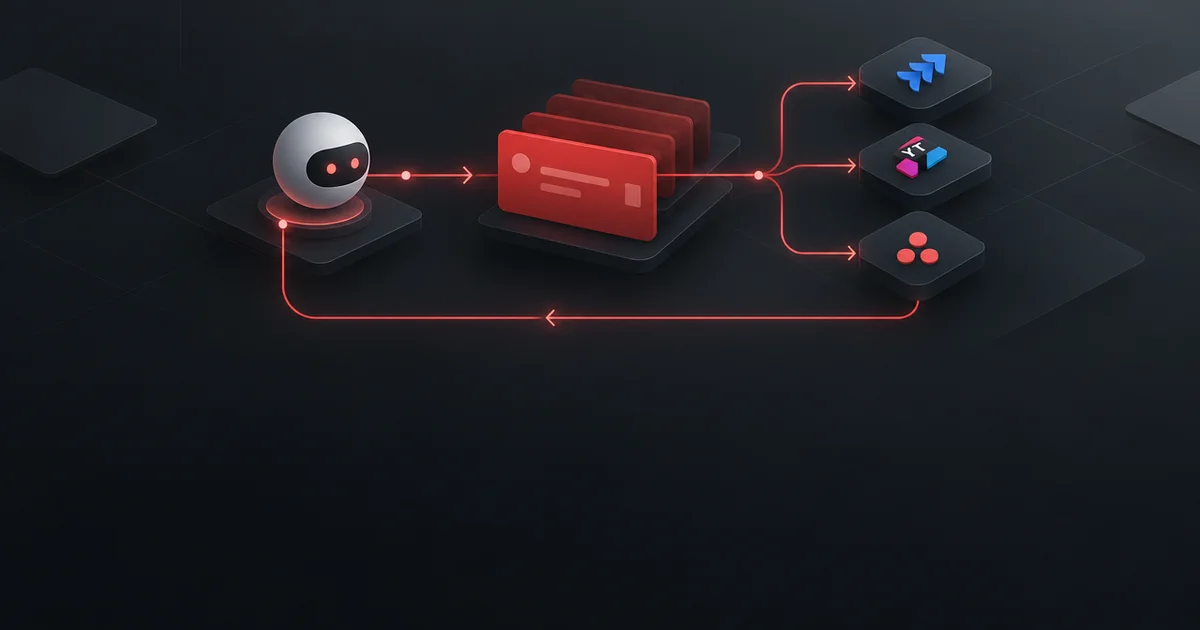
We connect AI agents to your task tracker: tasks appear from dialogs and incidents, statuses update automatically, and irreversible changes are confirmed by a person.
The agent creates, updates, and links tasks in Jira, YouTrack, or Asana as work happens.
Pricing
from ₽600,000
per project
This is the lower bound of a project. We scope the exact quote after a brief: it depends on volume and the number of integrations.
Capabilities
Tasks from a request
The agent turns a message or incident into a ticket with context, a source link, and a proposed priority.
Statuses without manual entry
Stage transitions are recorded from CI events, logs, and threads, not moved by hand.
Links and duplicates
The agent merges and links similar tickets so one problem does not live in three cards.
Estimate from history
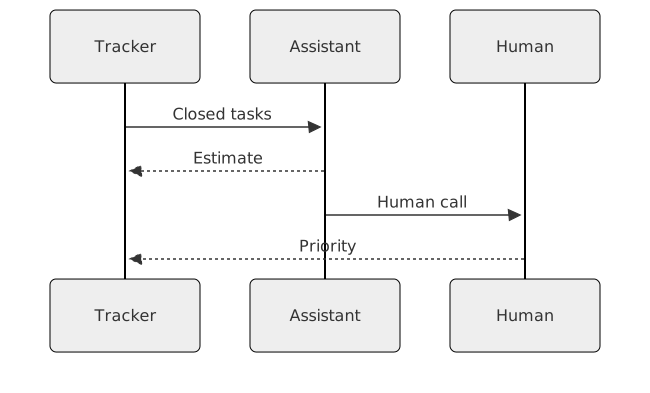
The agent proposes an estimate and assignee from similar closed tasks; the final call stays with a person.
From request to result
1
Process audit
We review the board, statuses, and transition rules: where tasks appear, who files them, and what breaks on handoff.
2
Status schema
We fix the mapping of events to transitions and block irreversible actions without confirmation.
3
Agent integration
We connect to the API and webhooks and build scenarios for creating, updating, and linking tasks.
4
Pilot on one queue
Two weeks on the real flow: we measure tasks filed without a person and the number of edits after the agent.
Check if it fits you
Good fit
A dedicated tracker with an API
Jira, YouTrack, or Asana offer an API and webhooks: the agent connects with no workarounds.
Transition rules defined
There is a status list with conditions: the agent follows it instead of inventing its own.
Not a fit
Tasks live in email
If tickets live in threads, we move the process into the tracker first.
Irreversible transitions on autopilot
The agent does not close epics or delete tasks on its own.
What you get
−35%
time spent filing and moving tasks
The agent filed tasks from support requests and updated statuses from CI events; manual filing stayed only for large features.
A ticket in minutes
Tasks survive the thread
The agent files a ticket while the problem is fresh and attaches the conversation and files. Tasks from threads reach the tracker.
Statuses from events
Shorter standups
Statuses come from events, so the meeting discusses decisions while the agent moves the cards. Standups get shorter.
One ticket
Duplicates get linked
The agent links similar requests to an already open task. Duplicates get linked, tracker load drops, and finding the right ticket takes seconds.
History-based forecast
Honest estimates
The agent proposes a priority and an estimate from closed tasks, and the gap against reality shows on a chart. Estimates get more honest.
What the delivery includes
A process audit
A process audit reviews the board, statuses, and transition rules, to see where tasks appear and what breaks on handoff.
A status schema
A status schema fixes the mapping of events to transitions and blocks irreversible actions without confirmation.
Agent integration
Agent integration connects to the API and webhooks and builds scenarios for creating, updating, and linking tasks.
A pilot on a queue
The pilot on a queue runs two weeks: we count tasks filed without a person and the number of edits after the agent.
How the system is built
A message into a ticket
The agent turns a message or incident into a ticket with context, a source link, and a proposed priority the moment it appears.
Links and duplicates
The agent links similar requests to an already open task, so duplicates stop piling up and tracker load drops, and finding the right ticket takes seconds.
Statuses from events
Stage transitions are recorded from CI events, logs, and threads, so statuses update without manual entry, and the team sees the current picture in real time.
An estimate from history
The agent proposes an estimate and assignee from similar closed tasks, while the final call stays with a person who sees the full history of the work.


Where the solution pushes back
- 01
The team defines transition rules
The agent follows the same transition scheme as the team, so the team defines the statuses. Where the rules stay silent, the agent repeats the mess.
- 02
Planning stays with the team
The agent removes routine around tasks, while the team plans sprint priorities. Planning stays with people, and the agent takes the busywork off their plate.
- 03
Support grows with the project count
With dozens of projects, support time grows: each status set needs its own mapping. We fix the support scope before the start so the load stays planned.
- 04
Tracker connection over API
Without an API the integration is limited to email triage, and a person moves tasks by hand again. A tracker webhook gives the normal mode and removes manual moves.
Technologies
The technologies we use in our work and their role in a project.
Tracker and event flow
The agent works with Jira, YouTrack, and Asana through their APIs. Changes arrive by webhook through Kafka, and task history is stored in PostgreSQL.
Cost calculator
This is an indicative range, not a quote. We scope the exact estimate after a brief: it depends on volume and the number of integrations.
Boards
Sync mode
Automations
Add-ons
Support
Year one: updates and monitoring, a reply within 2 business days.
Service
Integrating AI agents with a task tracker
The estimate covers our team's work. Hardware, third-party service licences and travel are added on request.
Estimated cost
₽780,000
Timeline
3 wk
Frequently asked questions
Does the agent file tasks itself?
Yes, if it has create rights. Filing is reversible, so it does not need human confirmation on every step.
Who closes tasks?
A person or a CI event by project rules. The agent closes only those clearly tied to a successful run.
What about non-standard tickets?
They go to a manual triage queue with a note and a reason instead of dissolving into the general list.
How long does the rollout take?
A pilot on one queue takes two weeks; a full launch with several projects starts at five weeks.
Can the tracker connect to other systems?
Yes, events arrive from CI, email, and messengers, and the agent merges them into one stream and files tasks in the tracker. External systems need no shared bus, just a webhook.
What does the pilot report show?
How many tasks were filed without a person, how many edits were needed, and on which types the agent erred. Few edits mean we widen the queue; many mean we add rules.
What teams add to this service
Related Services
Part of Solutions
Implementation Examples
×3
Publishing volume
Ready to discuss your task?
Leave a request – we'll get back with a proposal and a preliminary estimate.
Contact us